All Categories
Featured
Developing Long-Term Financial Boundaries for a Much Bett...
How to Efficiently Handle 2026 Credit Card Balances
Understanding the Shifts in 2026 Credit Reporting Laws
Homeownership Success Starts with Financial Education in ...
Learning Financial Literacy in Your Local Community
Table of Contents
Evaluating Interest Rate Moves for Metro Areas
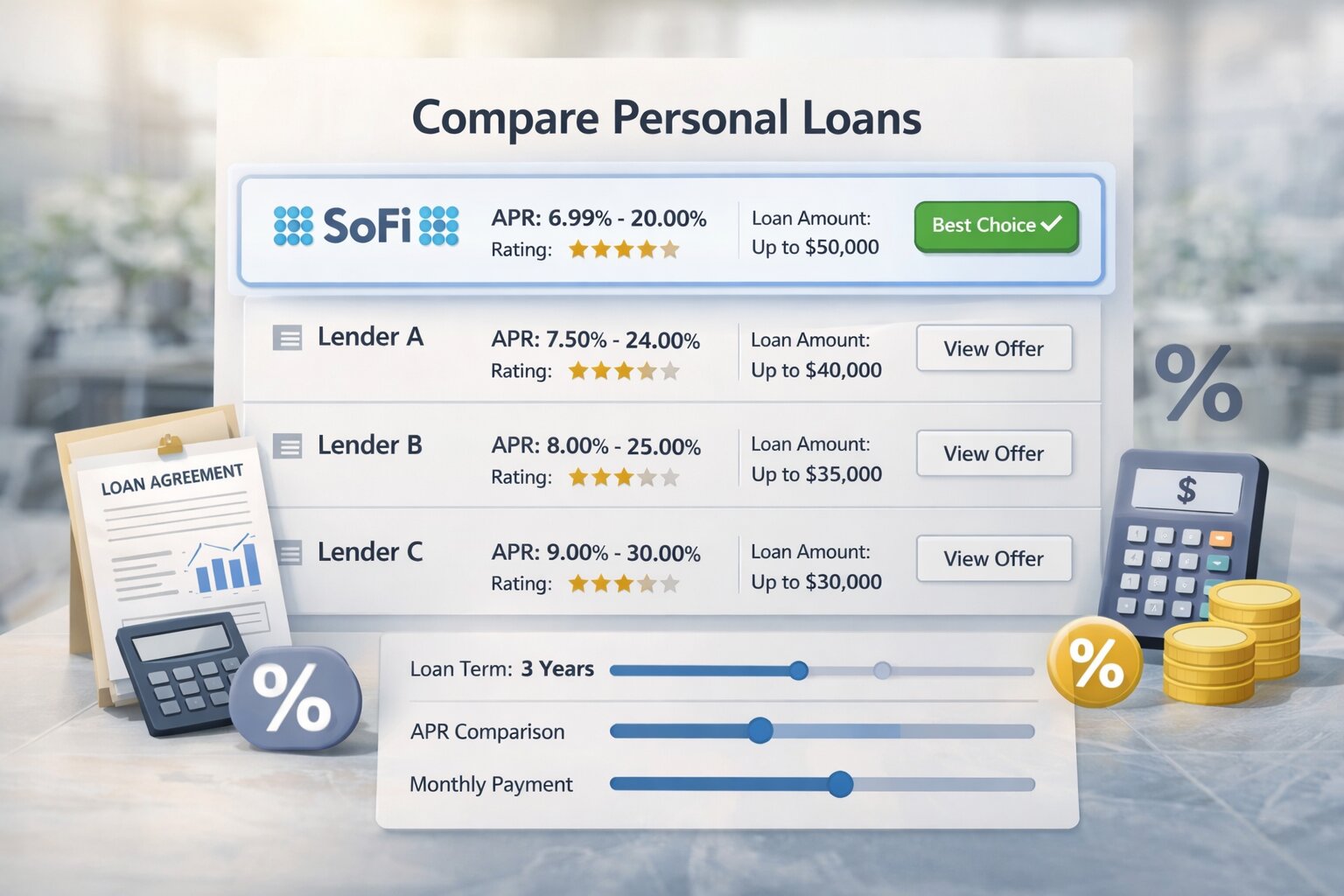
The 3rd quarter of 2026 finds the credit market in a state of cautious recalibration. After a number of quarters of fluctuating reserve bank policies, the cost of unsecured borrowing has actually reached a plateau that provides both hurdles and opportunities for households in the local market. While the rapid rate walkings seen in previous years have actually slowed, the baseline for personal loans stays higher than the historical averages of the early 2020s. For individuals managing high-interest charge card balances, the look for a feasible debt consolidation path has actually ended up being a matter of month-to-month money flow survival rather than simply basic interest savings.Current information for Q3 2026 recommends that top-tier customers-- those with credit history above 760-- can expect personal loan rates to hover in between 7.5% and 9.2%. For the typical customer in across the region, rates are more most likely to fall in the 12% to 18% variety. This disparity has caused a renewed interest in alternative debt management structures. Market shifts toward Financial Management show a requirement for sustainable repayment rather than simply moving balances from one high-interest lender to another. As lenders tighten their requirements, the approval procedure has actually become more strict, frequently requiring proof of stable earnings that accounts for 2026 cost-of-living changes.
Fixed-Rate Debt Consolidation Loans versus Variable Alternatives in the Local Region
The option between set and variable rates in Q3 2026 depends largely on one's danger tolerance and the overall duration of the repayment plan. Fixed-rate individual loans remain the basic suggestion for consolidation due to the fact that they protect the debtor against future inflation-driven spikes. In the surrounding area, numerous local credit unions have become more competitive than national digital banks by offering "community-centric" rates that somewhat damaged the big-box lending institutions. These smaller institutions often offer more customized underwriting, looking beyond a basic credit history to evaluate an individual's overall financial health in the context of the 2026 economy.Variable-rate products, though initially more affordable by 150 to 200 basis points, bring substantial dangers this late in the year. Financial analysts suggest that while rates are stable now, any unexpected shift in worldwide trade or domestic energy costs might activate a late-year adjustment. For somebody aiming to settle debt over a five-year period, the peace of mind provided by a repaired monthly payment usually outweighs the initial cost savings of a variable rate. Professional Financial Management Services has actually become a regular topic of discussion among financial planners who see the long-term advantage of locking in costs today.
Not-for-profit Debt Management as an Alternative to Borrowing
Not every home in the local community gets approved for a low-interest personal loan, specifically if their debt-to-income ratio has already gone beyond 40%. This is where the role of Department of Justice-approved not-for-profit credit therapy companies becomes vital. Organizations like APFSC provide a mechanism that does not depend on brand-new credit. Instead of getting a loan to pay off lenders, a Financial obligation Management Program (DMP) combines various unsecured financial obligations into a single monthly payment.The main benefit of this approach in 2026 is the ability of the agency to negotiate straight with creditors. Even when market rates for personal loans are high, these nonprofits can often secure rate of interest reductions to 0% or 10% since of established relationships with significant banks and charge card issuers. This makes the DMP a powerful tool for those who discover themselves evaluated of standard combination loans. Demand for Financial Wellness in Richmond VA shows a shift toward these structured relief models as consumers focus on overall debt removal over credit history optics.
The Mechanics of Rates Of Interest Negotiation in 2026
In the existing Q3 environment, creditors are frequently more ready to cooperate with nonprofit firms than with private customers. The factor is simple: banks prefer an ensured, albeit lower-interest, payment stream over the risk of a total default or bankruptcy filing. When a firm like APFSC steps in, they provide a standardized structure that lending institutions trust. This procedure involves an in-depth budget analysis, making sure that the proposed regular monthly payment is practical provided the current 2026 rates for housing and groceries.For locals of the local area, this not-for-profit intervention can suggest the distinction between a decade of minimum payments and a clear three-to-five-year path to zero balance. The program doesn't just lower the interest; it frequently removes late charges and over-limit charges that can otherwise keep a balance growing regardless of routine payments. This organized reduction of the primary balance is the most efficient method to fight the compounding interest cycles that identify 2026 credit card financial obligation.
Evaluating Financial Literacy and Long-Term Stability
Beyond the immediate numbers of Q3 2026 rate of interest, the long-lasting success of financial obligation combination depends on behavioral changes. Professional credit therapy involves more than just rate shopping. It includes an instructional part that assists participants understand the source of their financial tension. Whether it is a medical emergency, a duration of joblessness, or simply the rising expenses of residing in various states, determining the "why" is as essential as handling the "just how much." Not-for-profit companies frequently provide these instructional resources totally free or at a very low expense, as part of their 501(c)(3) objective. This includes HUD-approved real estate counseling for those whose debt might be threatening their homeownership or their ability to rent in a costly 2026 market. By integrating lower rates of interest with better monetary routines, these programs use a more holistic recovery than a basic bank loan, which might just clear the cards and leave the borrower's costs habits the same.
Regional Outlook for the Remainder of 2026
As the final months of 2026 approach, the credit environment in regional hubs is anticipated to remain tight. Lenders are viewing employment information carefully, and any sign of a softening labor market will likely lead to even greater interest premiums for "dangerous" customers. This makes today minute in Q3 a perfect time to lock in a combination strategy. Whether choosing a high-street personal loan or a nonprofit debt management plan, the objective remains the exact same: reducing the total expense of financial obligation and recovering control over one's financial future.For those in the local market, the local schedule of 501(c)(3) support implies that assistance is available regardless of credit history. The 2026 economy has shown that monetary stability is frequently a matter of utilizing the right tools at the right time. By comparing the leading loan rates against the possible cost savings of a worked out management plan, people can make an educated option that balances instant relief with long-lasting objectives. The course to debt-free living in 2026 is seldom a straight line, but with a structured strategy and expert assistance, it stays a reachable truth for many.

Table of Contents
Latest Posts
Developing Long-Term Financial Boundaries for a Much Better Future

How to Efficiently Handle 2026 Credit Card Balances

Understanding the Shifts in 2026 Credit Reporting Laws
More
Latest Posts
Developing Long-Term Financial Boundaries for a Much Better Future
How to Efficiently Handle 2026 Credit Card Balances
Understanding the Shifts in 2026 Credit Reporting Laws